You promise a customer 50 units showing in the warehouse; the order is confirmed, shipment is prepared... but when you check the shelf, there are only 34 units. What happened to the remaining 16? Were they stolen, shipped incorrectly, or never counted? This is exactly why stock counting is performed.
Stock counting is not just about determining product quantities; it is actually a control mechanism that allows a business to face its own reality.
What Is Stock Counting?
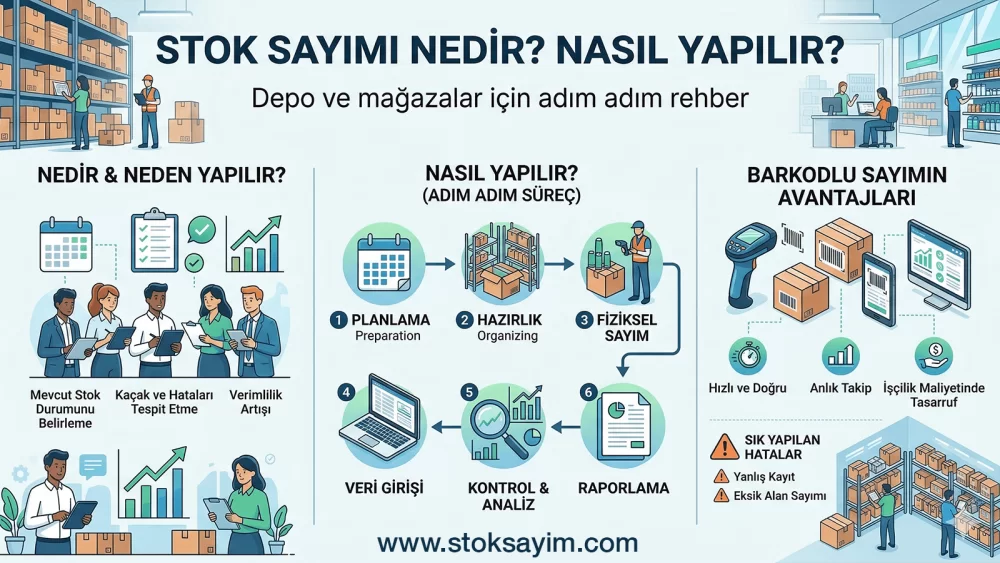
Stock counting (also known as inventory counting or physical inventory) is the process of physically counting all products, materials, and goods in a warehouse, store, or production facility and comparing them with the records in the system.
Why Is It Important?
- Financial Accuracy: Inventory is often a company's largest asset. Incorrect counts mean incorrect financial statements.
- Operational Efficiency: Knowing exactly what you have prevents over-ordering and stockouts.
- Loss Detection: Regular counting reveals theft, damage, and administrative errors.
- Compliance: Many industries require periodic physical inventory counts for regulatory purposes.
How Is It Done?
1. Pre-Count Preparation
Plan the count date, assign teams, print location labels, and ensure all receipts and shipments are processed.
2. Choose Your Method
- Full Physical Count: Count everything at once, usually during closed hours.
- Cycle Counting: Count a portion of inventory on a rotating schedule.
- Spot Checking: Random checks of high-value or high-risk items.
3. Use Technology
Modern counting software with barcode scanning eliminates manual errors and dramatically speeds up the process.
4. Compare and Report
After counting, compare physical results with system records. Investigate and resolve any discrepancies.